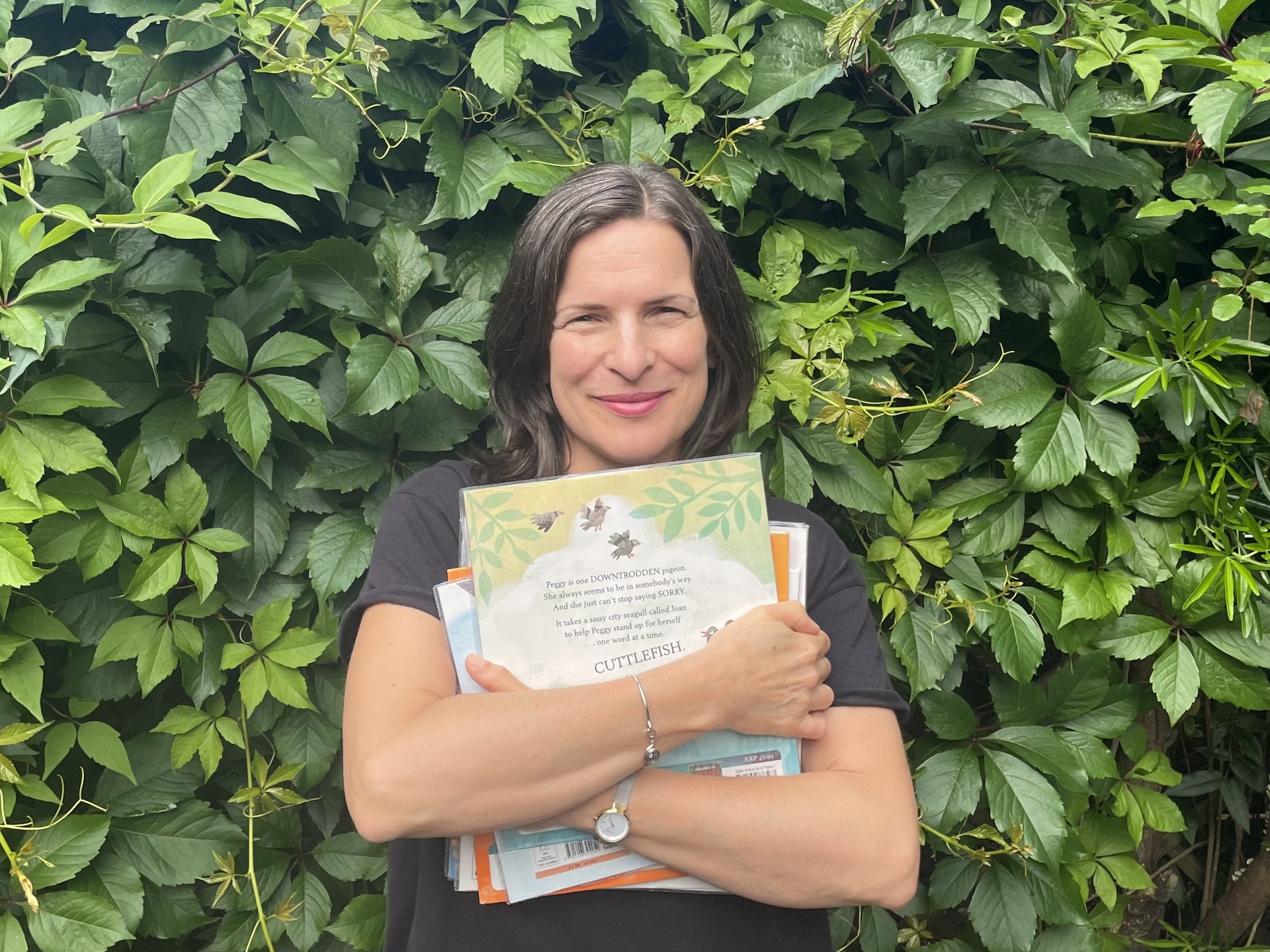

This is my rationale behind the videos I’ve been posting on YouTube.
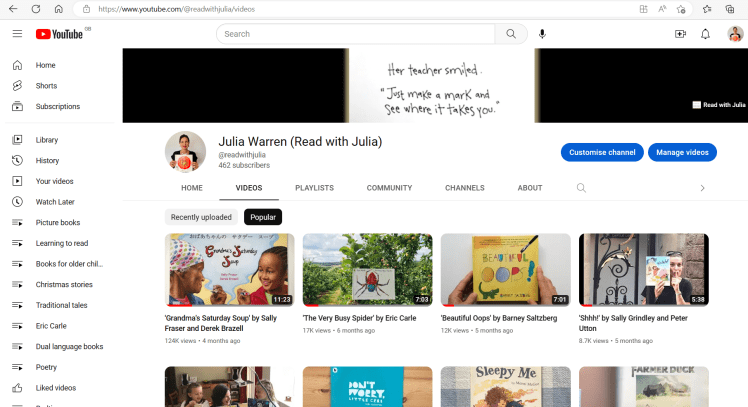
Since leaving teaching at the end of the 2022 summer term, I’ve been recording videos of myself reading children’s books aloud. I’ve frequently felt like an idiot, but I’ve carried on anyway.
Why?
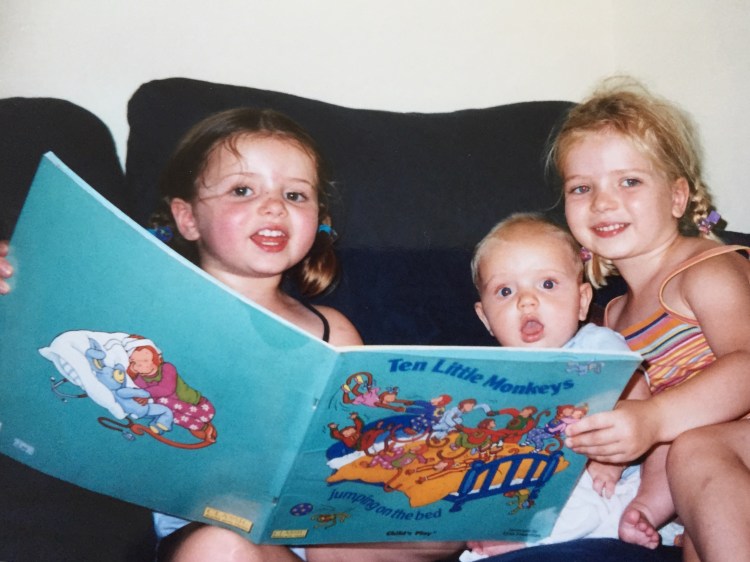
Reading with children has always given me so much pleasure. I have many fond memories of reading as a teacher and as a mum of 3. My teaching days seem to be over and my youngest will be 20 next month, but my need to share books with children will not go away.
Through my YouTube videos, I have been seeking to model Shared Reading as a means to:
Take off anxiety,
Take off stress,
Take off pressure,
Relax into reading,
Bond through books.
These continue to be my aims and they underpin every recording I make.
Anxiety, stress and pressure are barriers to reading success. They cause tension in relationships and rob joy from the reading process. I am tired of systems that turn reading into a homework task, where dutiful parents and children step in line and read a prescribed book for … minutes, at least … times a week.
I believe Shared Reading has rich potential to build strong, positive relationships through mutual enjoyment of wonderful books. Shared Reading offers parents valuable opportunities to discover more about their child’s personality. What does the child notice? What stands out for them? How do they respond to the text and pictures? What are they thinking? What are they feeling?
When I’m reading aloud for the videos, I’m imagining I’m back in the classroom at story time, or cuddling up on the sofa with my children gazing at the pages of the book all those years ago.
Let me share a few of the strategies I’m using as I read, and my intention behind them.
Slow it down
When I trained as a Reader Leader with The Reader Organisation in 2020, the course emphasised the need to avoid rushing through read-alouds. As we listened to the course leader reading to us in her unique, clear accent (she described it as ‘Scandi-Scouse’) we appreciated the fullness of the passages and poems she shared with us – because there was no sense of urgency.
That’s why I’m not speeding through the books I read aloud. Slowing down the pace allows adults and children to catch our breath in these crazy days of haste and hurry.
The power of the pause
My training as an Every Child a Reader teacher in 2010, led me to revise my practice significantly (I started my initial teacher training in 1988). Through my Reading Recovery training, I became increasingly aware of how my questions and interjections were interrupting the child, preventing them from thinking for themselves, and limiting their independent problem-solving.
When I stepped back and paused to observe and listen, I was provided with a window into the individual child’s thought-processes. I was then able to reinforce good habits or pinpoint the prompts that would steer them back on track.
As a younger teacher, I often felt the need for children to understand as much as possible in the books I read aloud. I cringe to think how many times I interrupted stories to ask unnecessary questions and give unnecessary explanations. Experience taught me to read with children as if I was laying out a healthy, help-yourself meal. I might draw their attention to certain dishes, but each individual child could take what they wanted. I stopped checking the food on their plates and resisted force-feeding them knowledge. Stories flowed freely when I learned to let things be.
In my videos, I often take time to pause… and every pause is deliberate. I’m imagining individual children responding in the moment, sharing their own thoughts and feelings, offering a window into their world. Real insights into a child’s understanding, attitudes, beliefs, and experiences can emerge from a well-placed pause.
“I wonder…”
If you’ve listened to my recordings, you’ll have heard me ‘thinking out loud’. My intention is to encourage the child to do the same. The “I wonder…” is usually followed by a pause. I’m not waiting for a right answer. I’m simply inviting the child to ponder and reflect with me. There’s no pressure on the child to say anything in response, only a desire to create a safe space where they can express their thoughts and feelings when, and if, they choose to.
When the child is ready to voice their thoughts and feelings, we are able to learn more about who they are and what makes them tick. Our relationship with the child deepens as we allow them time and space to express their individuality, and as we validate their contributions to the text.
I wonder if this blog post achieves its goal of giving an outline of what makes me tick, and the purpose behind my YouTube videos…
Follow the ‘Read with Julia’ blog
Get new content delivered directly to your inbox.
 Read with Julia
A champion of children; a champion for parents who want to support their little ones to flourish.
❤️