Stupid question? Maybe…
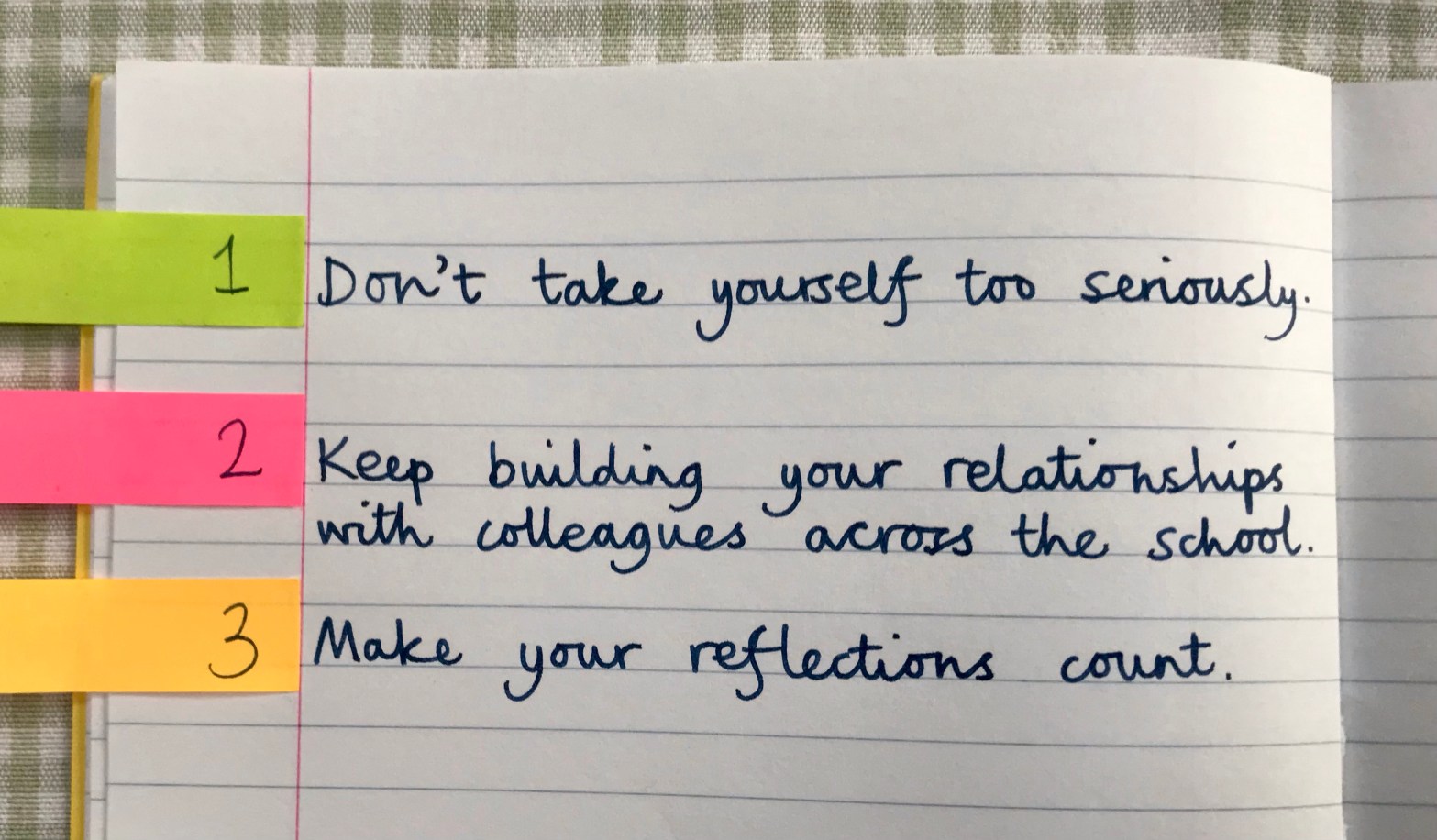
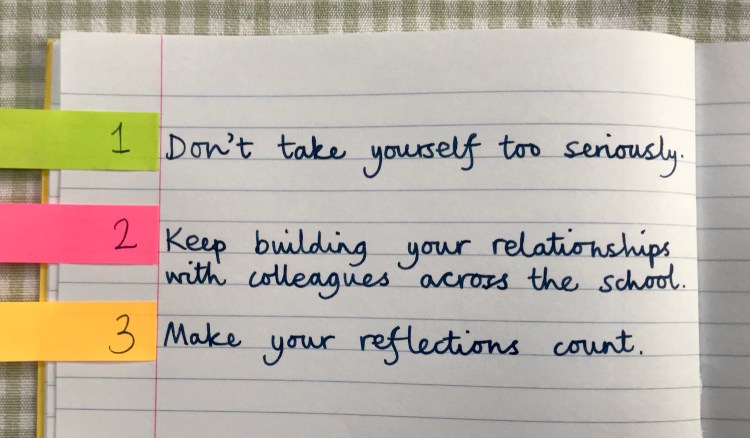
I’m sharing my story in the hope it helps others. Here are 3 lessons I learned the hard way.
I’m writing at the beginning of the 2023/24 academic year in England, after leaving teaching at the end of the 2022 summer term. With the benefit of hindsight, I’m offering a few pointers I wish I’d been given.
When I left teaching, I found a part-time job working for a local charity as their Community Connector, I covered a temporary admin role as Acting Secretary for the Bishop of Hereford for 6 months, and (since the beginning of April 2023) I’ve been spending 2 days a week supporting my husband, Sean, as he prepared to launch his suite of online reflective tools for teachers.
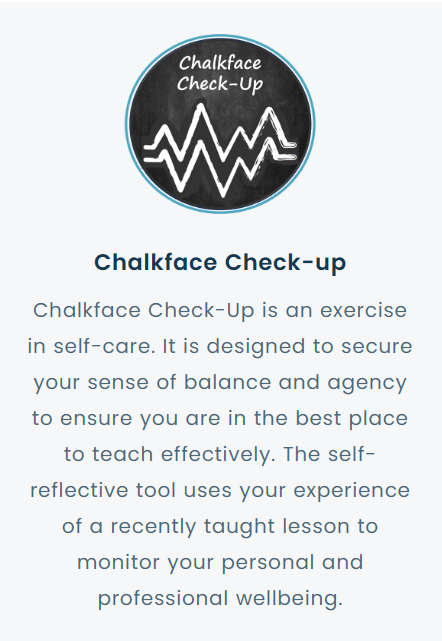
As I share my ‘pointers’, I will also explore the benefits of Sean’s online tool Chalkface Check-Up: an exercise in self-care and how it could have helped me during my final year in teaching. (Don’t be put off by a tiny bit of advertising. There’s no pressure to buy anything.)
I qualified as a primary school teacher in 1992 after a 4 year teacher training degree at Marjon, Plymouth (which is where I met Sean).
I started the 2021 – 2022 academic year quietly hoping that the beautiful reception classroom I found myself in would be my home until retirement. I loved the Early Years Foundation Stage (EYFS) – and still do. The previous year, I’d taught a Year 5 class at the same school, covering a colleague’s maternity leave. I’d enjoyed working as part of the team, where I’d felt valued and supported. When I’d spoken to my eldest daughter about the vacancy in reception, she’d encouraged me, “Why not, Mum? You’re happy there.”.
There were three teaching vacancies at the school and, after a thorough interview process, I was one of three teachers appointed on a year’s temporary contract. I was the oldest by far and my two bright, young colleagues were just beginning their teaching careers.
As I began my new post, the last of our 3 children left home and I was adjusting to our empty nest. I had the financial responsibility of being the sole earner, after my husband’s redundancy. I was also coming to terms with the death of my dad in May, 2021.
Challenges in our personal life don’t disappear when we walk in through the school gate (even if the busyness of the school day means we have no time to give them a moment’s thought). The Chalkface Check-Up guided reflection encourages us to acknowledge the times when our state of wellbeing is not as balanced as we’d like it to be. There’s no judgement involved and the review of a recently-taught lesson is confidential – with an option to share with a trusted colleague.
#1: Don’t take yourself too seriously
From the moment I was appointed, I was eager to prove myself. I gave everything I had to the 30 x 4-5 year olds in my class. The number grew to 31 by the end of the autumn term. In addition to the diverse and complex needs within the group, the Covid pandemic meant some of the children had never been to a pre-school setting and were parted from their parents for the first time on the day they started school. Two thirds of the class were boys. One third of the class came from homes where English was an additional language.
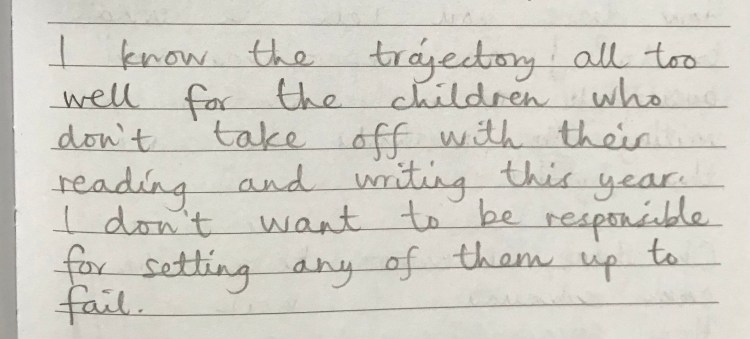
My years of studying the early development of reading and writing – and all of my experience as a literacy intervention teacher – had convinced me of how crucial the reception year was. The following journal entry, written at the close of autumn term, shows how I was losing perspective:
All year, I worked diligently to improve my practice; nurturing each child as an individual, while providing opportunities and encouragement for them to bond with each other and as a group; building relationships with their families; establishing a healthy structure of routines; organising my classroom to allow for effective continuous provision; actively seeking feedback from my co-workers in the classroom to make sure they were able to work efficiently; reading widely about best practice in the Early Years Foundation Stage (EYFS), listening to podcasts, watching webinars…
I told myself this was all a worthwhile investment in my Continuous Professional Development, that would pay dividends in years to come.
In November, my two bright, young, competent colleagues and I were informed that the three of us would be required to reapply for our jobs as there were only two teaching vacancies for September 2022. Suddenly, the potential value of all my ‘worthwhile investment’ plummeted.
Regular use of the Chalkface Check-Up tool (once per half-term, for example) would have guided me to organise my thoughts, re-balance, and set clear goals. The tool would have alerted me to how much I was neglecting my health and wellbeing in my relentless pursuit of success.
#2: Keep building your relationships with colleagues across the school
As the year went on, I felt a growing sense of isolation from staff outside of my classroom. Our building was separated from the rest of the school by a flight of steps, a ramp, and a pathway. I can’t help wondering if this contributed to a ‘them’ and ‘us’ vibe.
The EYFS staff met infrequently as a team and communication tended to be through snatched conversations. In every key stage I’ve taught, I can’t remember ever reaching the end of my to-do list. However, the practical implications of having up to 90 little people learning through play – and learning to tidy up after themselves – indoors and in a very large (and very wonderful) outdoor classroom were immense. There was always work to do. I lost a stone in weight over the course of the year.
I missed my colleagues from Year 5, but I didn’t make time to go and renew acquaintances. I recognised that everyone was busy and I didn’t want to interrupt or bother them. I didn’t make time to go up to the main staff room at lunch time. We had a weekly whole staff meeting, but most of these were led from the front and, usually, there was no time for more than a quick ‘hello’. Perhaps I should have stayed at the end, but I tended to rush back to crack on with that to-do list.
The more isolated I felt, the more I retreated into my classroom as an unhealthy coping mechanism. I was working in a school where the value of Positivity was highly esteemed. At the same time, I was aware of my own increasing feelings of negativity. I kept myself to myself as I was wary of them spilling out in my conversations (which they sometimes did).
I was intent on making sure the children were protected from my internal struggles. It was of the utmost importance to me that I provided a safe, secure space for each child to grow and flourish. The cognitive dissonance of what was going on above and below the surface took its toll.
Looking back, I needed support to facilitate professional, open and constructive conversations. I’m convinced that meeting regularly with one or two colleagues across the school would have brought a renewed sense of connection and purpose to my daily work. The Chalkface Check-Up tool has great potential as a catalyst for professional conversations.
When a small group of teachers meet together regularly and relationships of trust develop, a safe place is created where recorded responses from individual Chalkface reflections can be shared openly. In the discussions that follow there is rich potential for meaningful insights and a mutual commitment to act with fresh intent.
#3: Make your reflections count
Throughout the year, I reflected… and reflected… and reflected on my practice. I kept a journal and I found getting my thoughts down on paper helped a bit. In May 2022, I journalled a description of one of my days as a reception teacher to try and make sense of my daily work. I published it as part of my blog:

https://readwithjulia.com/2022/06/06/slow-how/
More often than not, my reflections went round and round in circles and were unresolved. I could not switch off. My endless attempts to process my thoughts robbed me of sleep. I’d find myself lying awake at night replaying scenarios. My daily beginners’ phonics sessions continued to play on my mind. I was deeply concerned by the children’s limited progress. I had no freedom from the school’s phonics scheme and the heavily structured lesson plans suffocated my sense of agency. Sean encouraged me to use his prompts (which are included in his tools) to structure my reflections, but it felt like too much extra effort and so I continued in ‘familiar toil’.
The phrase ‘familiar toil’ was introduced to me recently by a friend and teacher. It represents the security blanket of being able to point to all the work we’re doing – so we can show the world how busy we are. The rut of ‘familiar toil’ kept me from weighing up the efficiency and effectiveness of my efforts – and prevented me from finding a better way.
If the Chalkface Check-Up: An Exercise in Self-Care had been up and running when I needed it (and if I had taken a break from my ‘familiar toil’ to make good use of it), I would have been provided with a helpful structure to direct my reflections into forward-thinking action.
Instead of tossing and turning through the early hours, I could have come downstairs switched on my phone, and used the tool to put my thoughts (and then myself) to bed.
https://teachersreflect.online/collections/all
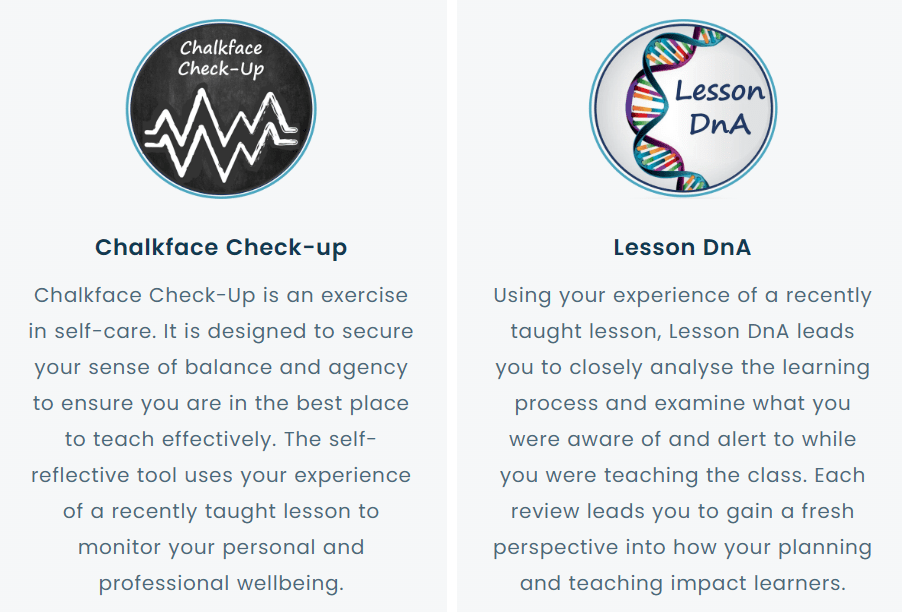
The first two of the Edusense Reflective Tools are now available (September 2023). Chalkface Check-Up and Lesson DnA are based on Sean’s doctoral research.
If you’d like to find out more about Edusense Reflective Tools, we warmly invite you to visit Sean’s website:
https://teachersreflect.online/
Follow the ‘Read with Julia’ blog
Get new content delivered directly to your inbox.
 Read with Julia