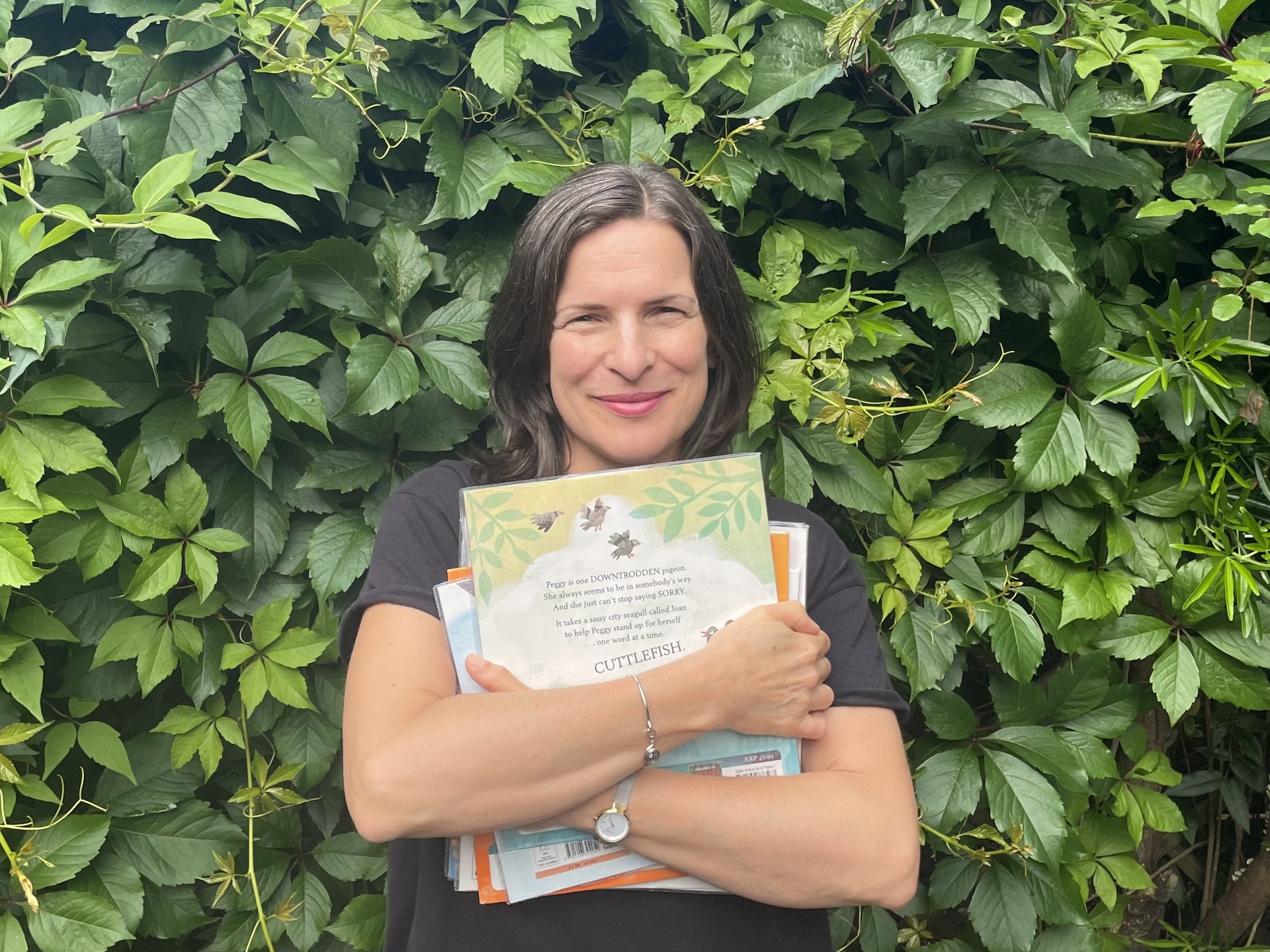
I went to stay with my mum in Liverpool during the May half-term. We talked – a lot. One of our conversations was about my YouTube channel and the videos I’d been quietly creating and posting in the hope of encouraging families to read together and to help adults support children in learning to read and write. My mum was an infant teacher for all of her working life. She had watched a few of my videos and, when I asked if she had any advice for me, she replied,
“Just keep it simple.”
Her words resonated with me. From the very beginning, that is what I’d set out to do. If you’ve watched any of my videos, I’m sure you’ll agree that there’s nothing flashy or high-tech about them. They’re obviously homemade and ‘done on the cheap’. I don’t have limitless resources, but I’m learning to be content with what I do have – and to use it to the best of my ability.
‘I’d like to teach the world to [read and write] in perfect harmony’ and I don’t think it has to ‘take money, a whole lotta spending money’.
But…
‘It’s gonna take time
Whole lot of precious time
It’s gonna take patience and time, oh
To do it, to do it, to do it, to do it, to do it, to do it, oh, yeah‘‘I’ve Got My Mind Set on You’ James Ray, 1960
…because the reality is: learning to speak, read and write English is complicated. Even as a native English speaker, who teaches English for a living, I still make mistakes.
Rhubarb
A couple of weeks ago, I really enjoyed creating a new letters and sounds ‘r for rhubarb’ video. I had great fun adding photos and searching out the ‘Roobarb and Custard’ theme tune to sit alongside my work. The video came up in conversation yesterday evening, when my son and I were cooking the evening meal.
“Doesn’t the rrrrr in rhubarb need 2 letters?” he asked.
It was only then that I realised my blunder (can I blame my menobrain again?). If a child had written ‘r’ instead of ‘rh’ I’d call it a ‘virtuous error’. But I knew how to spell ‘rhubarb’ and I’d still failed to use the correct 2 letters for the 1 sound. It should have been ‘rh’ for ‘rhubarb’! I hung my head in shame, before running upstairs to my laptop to take the video off my YouTube channel, while wondering where its 18 views had come from. (If anyone’s interested, my plan is to edit the video and add it to my ever-increasing Outtakes playlist.)
It isn’t easy to learn to read and write and English is notoriously difficult – here’s a little clip from ‘I love Lucy’ to prove it:
For the last few months, I’ve been meeting a Ukrainian friend on Zoom every Friday and we’ve been sharing picturebooks and poems to help her learn English. She’s a musician and we’ve been reading ‘The Bear and the Piano’ by David Litchfield together. We’ve made a collection of different spellings of the ‘aw’ sound and here I am getting overly excited about ‘ough’:
“Just keep it simple.”
Let’s come back to those wise words from my beloved mum, who knows first-hand how tricky we can make the teaching of early literacy. In the late seventies and early eighties, she taught in an infant school in Milton Keynes and had to use the ITA (Initial Teaching Alphabet) reading scheme. If you’ve never heard of ITA before, here’s a tiny taster of a page from a reading book:
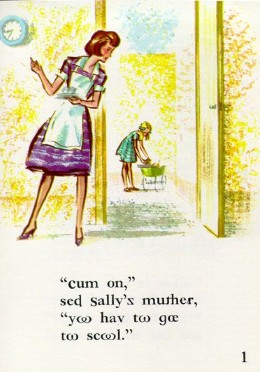
Doesn’t that take ‘decoding’ to another level?
Reinventing the wheel
We keep reinventing the wheel with the teaching of reading and writing, but I can’t see it getting any less complicated. I’ve lost count of how many ‘new’ initiatives (like this month’s Writing Framework) I’ve seen come and go. If the burden outweighs the benefit, do we still need to carry them?
There’s no doubt that the general state of affairs and despair over children’s reading and writing in 2025 needs to be addressed. What if there was a concerted effort to strip away all the unessential baggage, so we can get back to the heart of the matter?
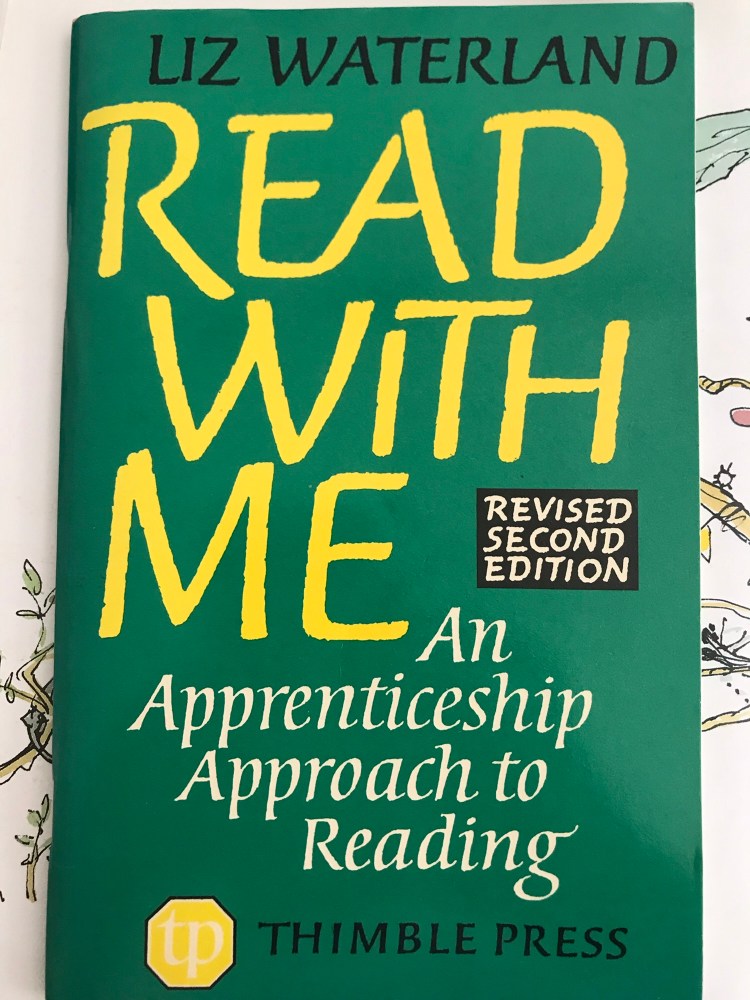
I like the refreshing simplicity in Liz Waterland’s thinking, documented in a booklet I’ve held onto since my initial teacher training (1988-1992). It was the inspiration behind the name of this website and I’m hoping to share some of her insights in a future blog post.
Lessons from my picturebook library
Today, my friend Mrs Armitage has been teaching me some valuable lessons…
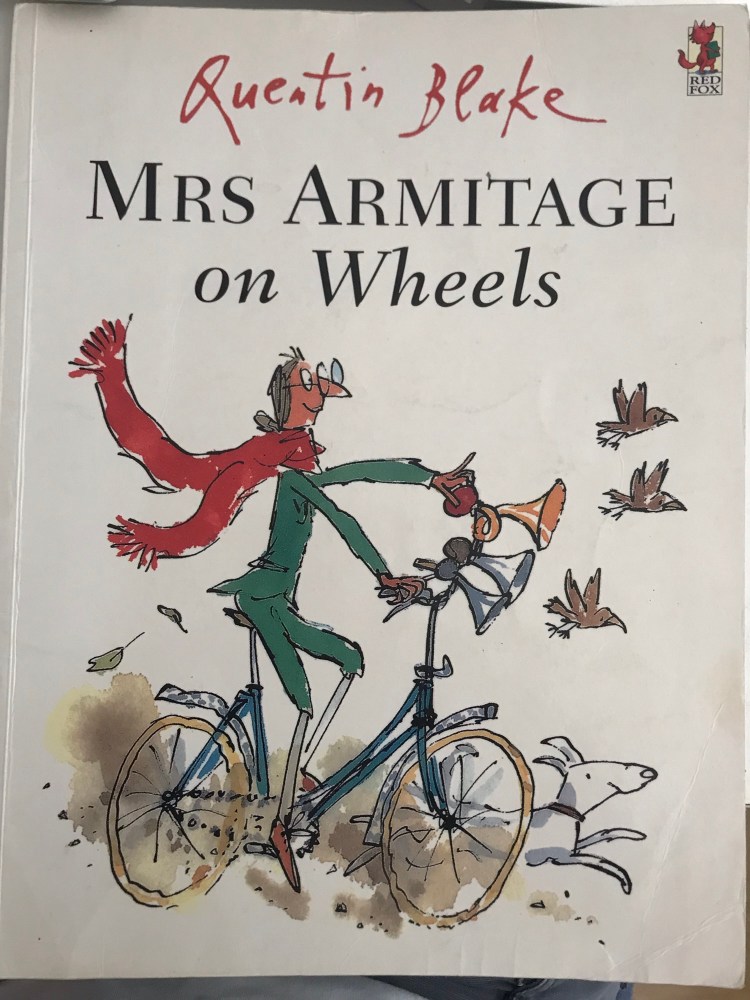
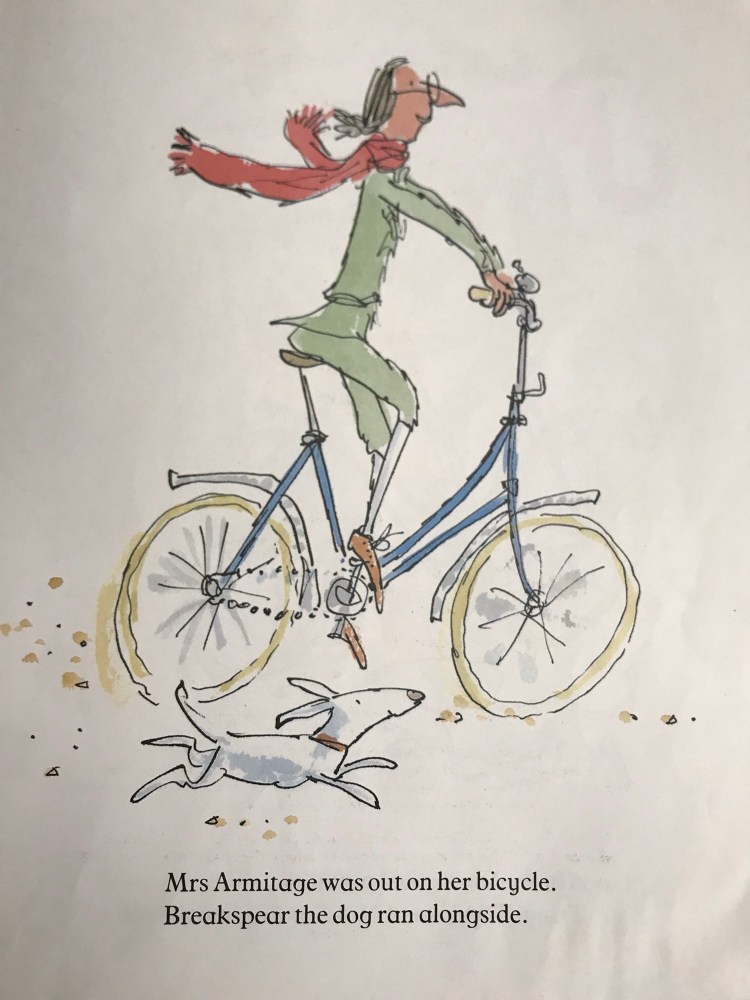
Quentin Blake’s story begins with Mrs Armitage and her faithful dog, Breakspear, enjoying a breath of fresh air and some exercise.
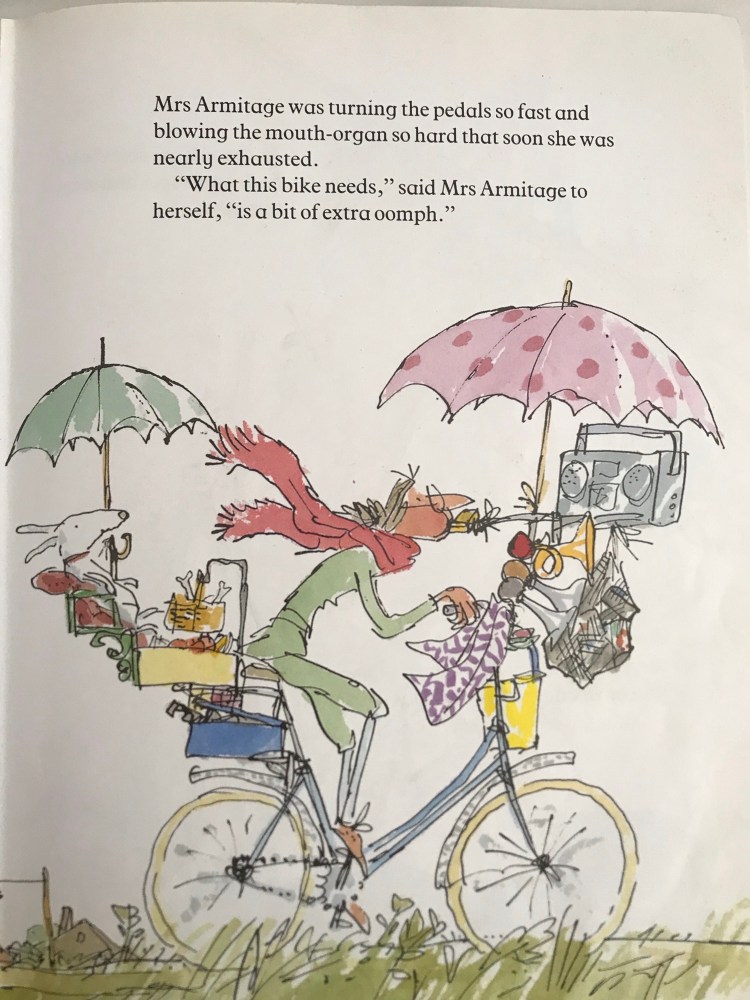
Mrs Armitage has a lively, inquiring mind and, as she cycles along, her thinking clicks into multiple gears (pardon the pun). She adds various paraphernalia to her bike, but still finds it lacking in the ‘oomph’ department.

She sets about solving this problem and it looks like she’s found the perfect solution, but…
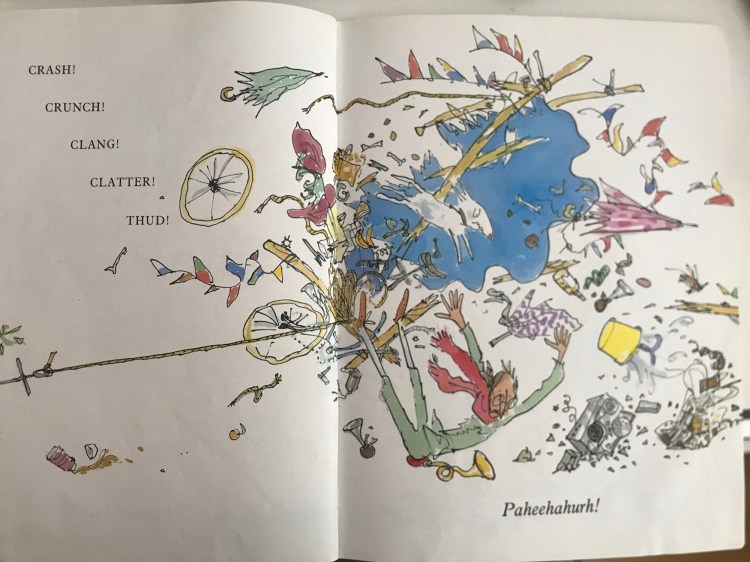
…things don’t quite go to plan.
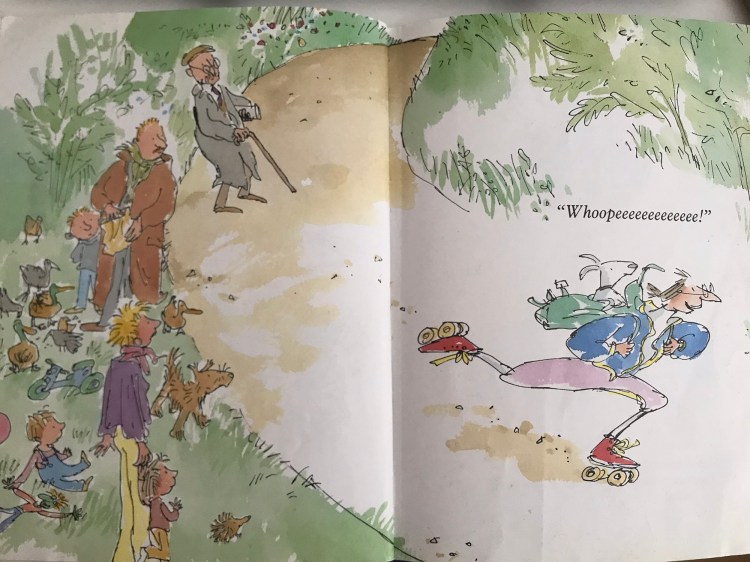
Undaunted, she soldiers on with a new strategy for success.
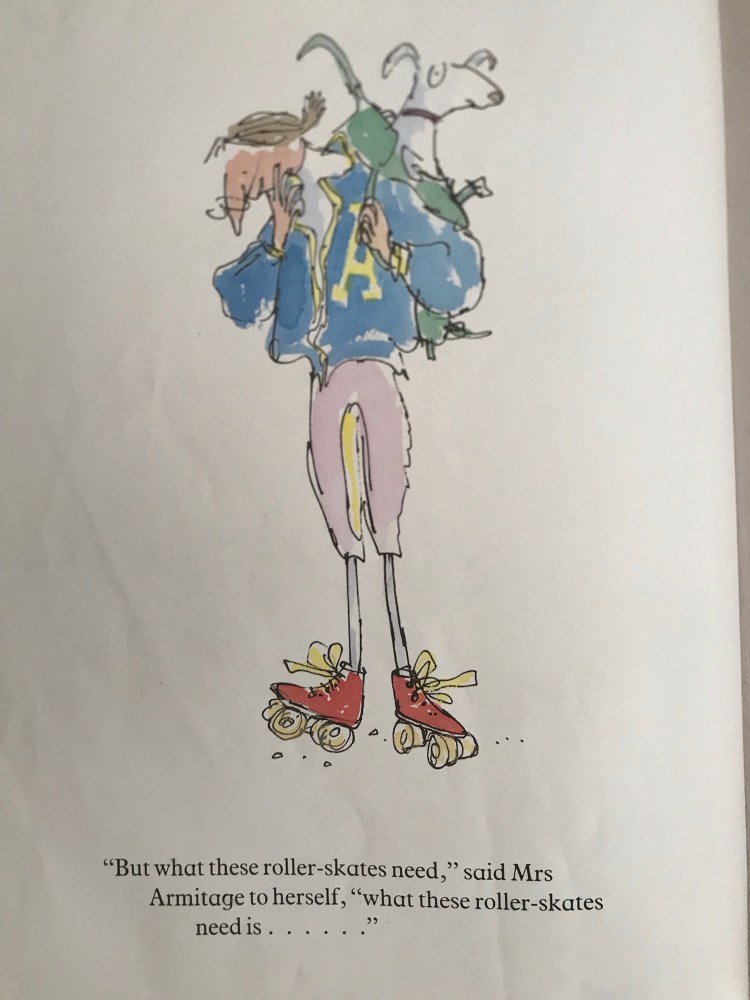
But has she learned from her mistakes?
And will we learn from ours?
rh for rhubarb
rh for rhubarb
rh for rhubarb!
A few family photos to finish…
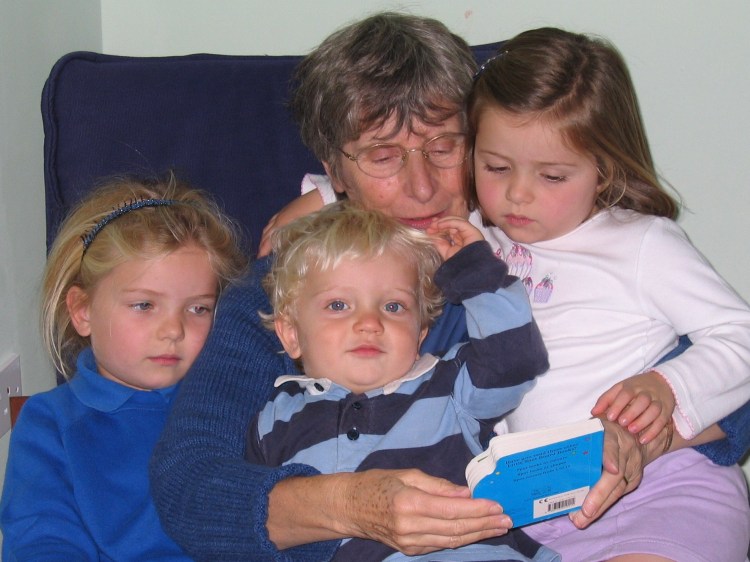
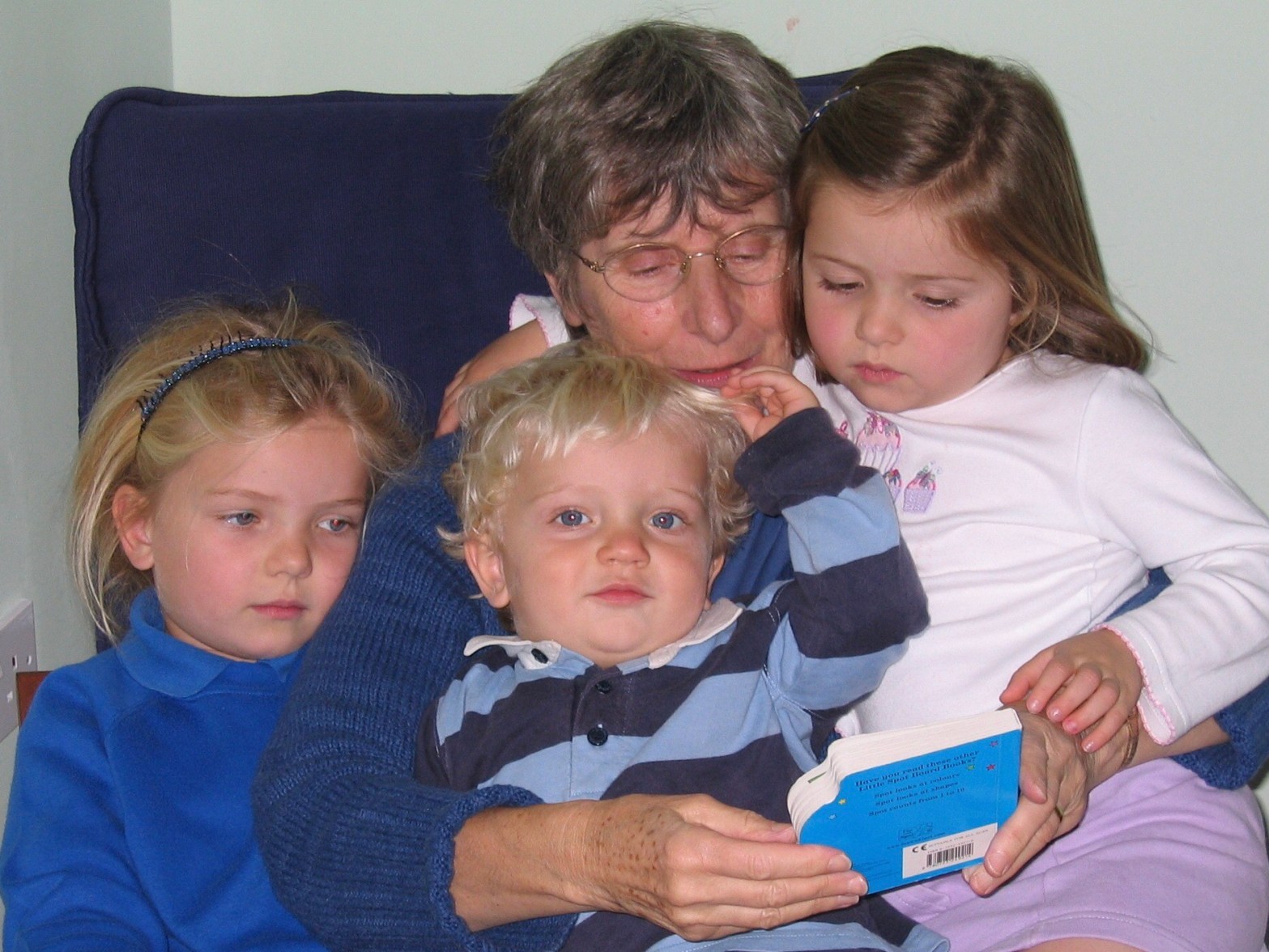
My three children snuggling up to read with my mum in 2004.
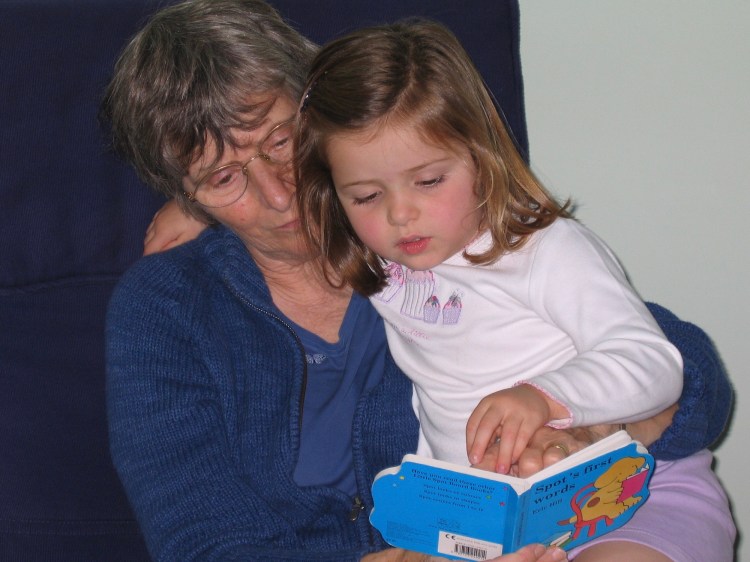
Isn’t it interesting that the child who spent the most time snuggling up with my mum and a book in 2004 is the adult who spends the most time reading for pleasure in 2025?
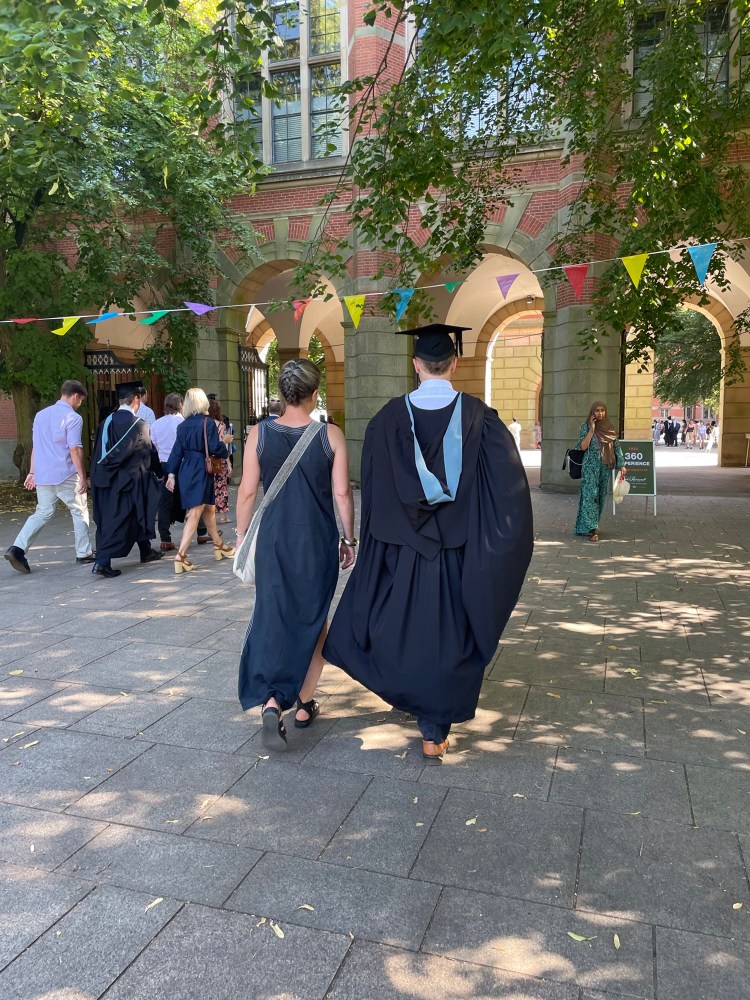
You know that blonde, blue-eyed boy twirling his hair in the first photo? Well, here he is graduating from the University of Birmingham with a first-class Liberal Arts and Natural Sciences’ degree last Friday (11th July 2025) …and that quietly proud mum by his side? That’s me.
 Read with Julia
I just love your posts Julia
you are such a gifted teacher, a real gem.
❤️🙏❤️