I guess there always have been (and always will be) market forces in education. It’s certainly a place for big business now. But where are the money makers driving provision for the children and young people of today? What happens to freedom of inquiry and investigation when research and development is funded by companies pushing their product? When the love of money starts to take hold, who listens to the workers at the chalkface?
We need to return to the process of education. The development of critical thinking that requires the investment of effort and time. Blood, sweat and tears have taught me this: education isn’t a ready-made package you can buy off the shelf; there are no easy routes to the power of knowledge and understanding.
My Memories of Reading Recovery
In my experience, turning the process of education into a product can lead to the pollution of promising pedagogy.
My Reading Recovery teacher training started in 2010 and was the best In-Service Training I have ever received. One of the intervention programme’s strengths was the excellent professional development opportunities it provided for its teachers. Every fortnight, my colleagues and I met together for an afternoon of training, led by Wendy Jenkins. We took turns teaching a live lesson observation behind a one-way window in a mutually supportive environment. We then spent time in shared reflection and analysis of the teaching and learning behaviours we had encountered.
My practice improved exponentially as a result of my peers and I being actively encouraged to observe closely and think critically about the individual needs of each child. My knowledge and understanding of highly-tailored early literacy intervention were enriched through shared insights and fresh perspectives during our bi-weekly collaborative training sessions. But the promise in the pedagogy was shortlived for me.
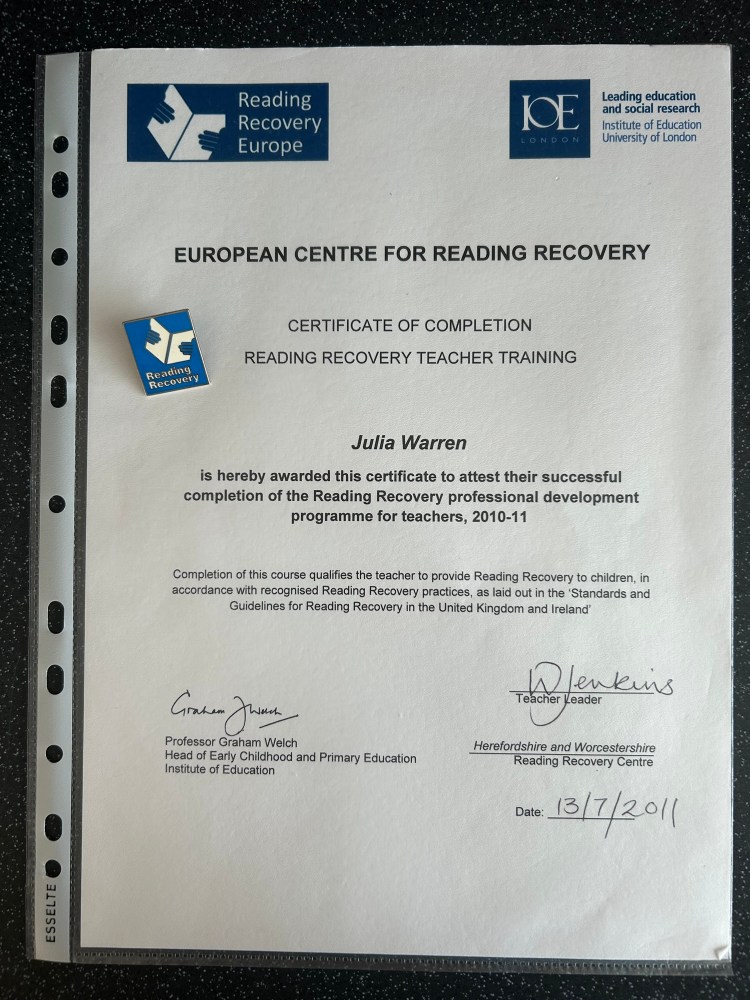
After our first year of funded training in Herefordshire and Worcestershire, I found that the pressure to amass evidence to prove the programme’s worth swept under the carpet the emerging flaws in the methodology. My confidence in the programme’s claims grew weaker as the demands for data grew stronger.
The last straw came for me in my second and final year delivering the programme. My colleagues and I were told to restrict the intervention to the children who showed the most potential to make significant progress. I was troubled by the underlying, unspoken motive behind the command. To my mind, we were being told to collect data to boost the evidence of success and sell the intervention. I questioned the message our new Teacher Leader had passed on to us, what about the children in greatest need of the intervention, how would their needs be met? My questions remained unanswered and my conscience gave me no rest.
When I returned to my school, I met with the head and deputy. I received their full support to continue working with the children whose observation surveys had shown most need of support. At the end of the 2012 academic year, funding for the Reading Recovery Programme in Herefordshire ended and I returned to full-time class teaching.
I returned to the classroom far more equipped to meet the needs of children struggling to take off with reading and writing than I had ever been, but my experience left me with a deep distrust for glowing claims, shiny ‘research evidence’, and soaring statistics. It was a painful lesson to see how product trumps process when money is at stake.
Rigorous and robust – data we can trust
Let me be clear. I am not anti-data. An effective education system needs robust, rigorous data that can be trusted.
But I am tired and jaded of data collection that “massages the numbers” (a phrase I heard a senior leader use a long time ago). I am concerned by a tick box approach to data, which fails to probe and dig deeper into the results. We need a healthy curiosity to feed the roots below the surface.
Reading Recovery has been dismissed by many as a useless intervention. It was too expensive. The accelerated progress of too many children did decline over time. There were weaknesses in the programme. But there were also many strengths that made a positive contribution to the development of both learners and teachers alike. When the dirty bathwater is thrown out, we must hold on tight to the babies.
Funding the future
Recently, my sister (Community Engagement Lead at Liverpool Council) invited me to a CBeebies Parenting launch event at the Five Children and Families Trust Hub in Speke. I was delighted to visit the family hub, meet new people and learn more about CBeebies’ parenting resources.
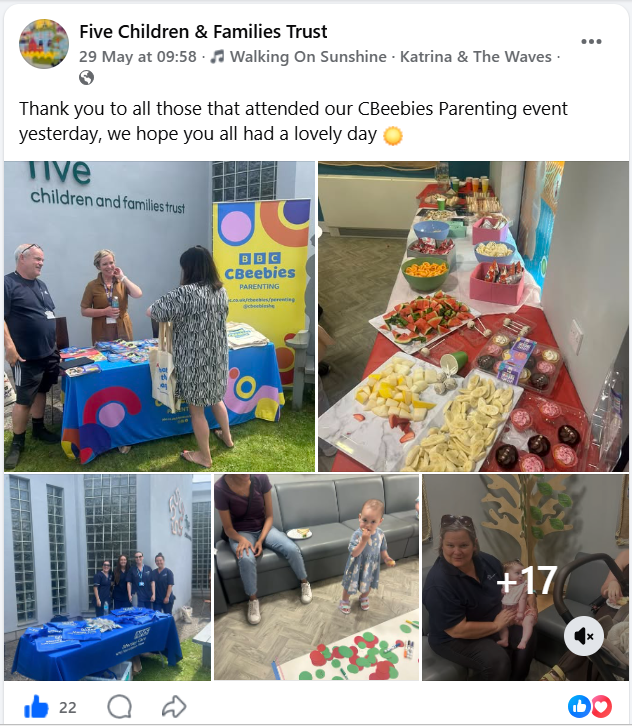
https://www.facebook.com/share/1EHvomeymd/?mibextid=wwXIfr
One of the highlights for me was a conversation with Dr Jamie Lingwood, Senior Lecturer in Psychology at Liverpool Hope University, about shared reading at home. I was encouraged to meet somebody with an enquiring and openly curious mind, interested to learn from other dimensions in shared reading. He told me about new innovation funding for children learning at home with their dads.
My ears pricked up. I was preparing to start a little reading research project of my own on Saturday 6th June. I had paid £20 to hire a room at Ledbury Library to work with a parent and child during the trial. I wondered if there might be a potential avenue to develop my ideas into a funding application through a local community group…
But when I searched for more details of the funding Jamie had told me about, my enthusiasm fell flat.
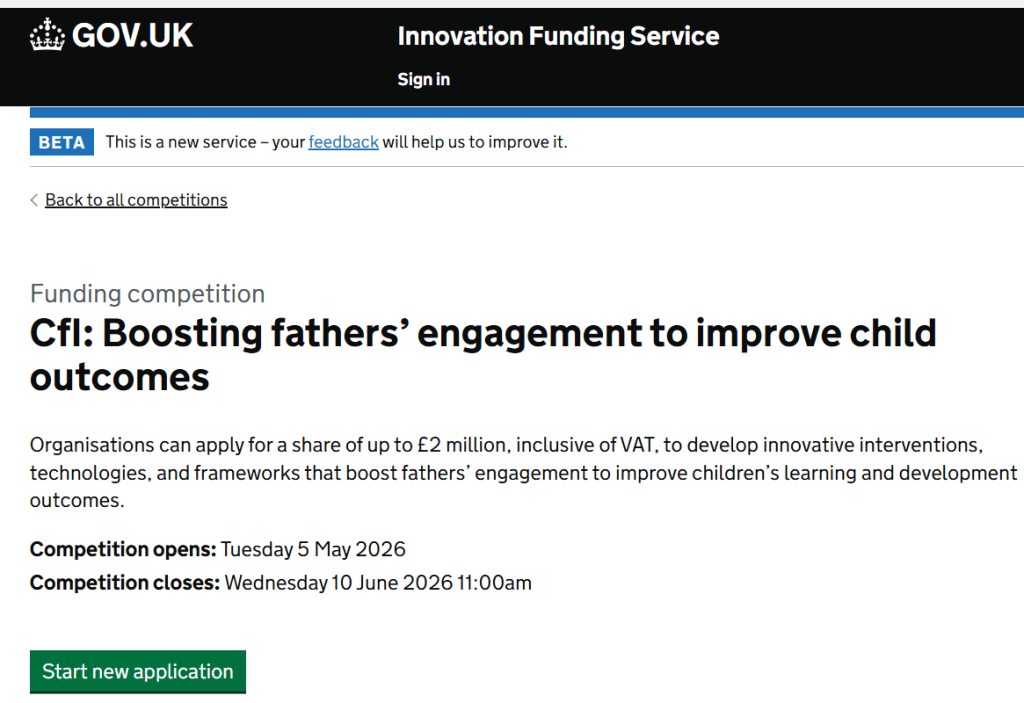
The scope for the government’s funding was way beyond me:
‘Phase 1 projects can range in size up to total eligible costs between £200,000 and £500,000, inclusive of VAT.’
All though this big pond was out of reach for this little fish. I sincerely hope the funding opens up opportunities for ‘freedom of inquiry, investigation, research, expression and publication (or dissemination)’. We need researchers to be permitted to plumb the depths beneath the surface and find answers for the children of today.
Potential for growth
What if researchers, developers and policy makers were to really get down on their knees in the dirt and probe deeply? What if they were to pay close attention to existing, strong, healthy root systems powered with potential for growth?
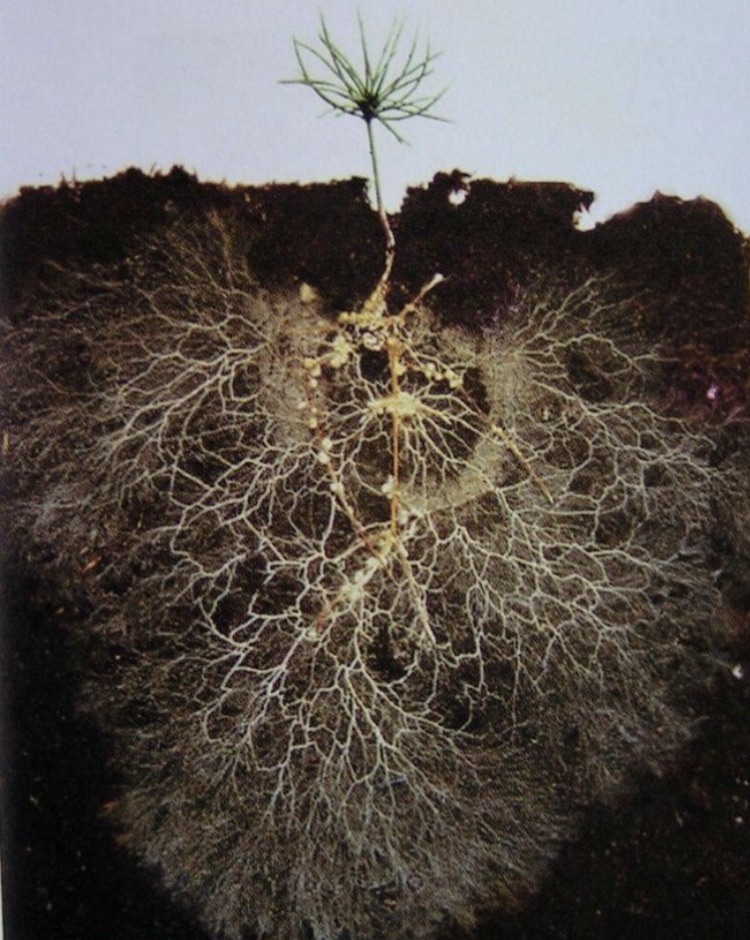
Who has eyes to see teachers who have been quietly rooting and grounding their pedagogy, slowly but surely honing their craft, day in and day out for decades?
Who has ears to hear the reliable and authoritative voices at ground level, under the hubbub of the loud and proud?

What if the UK Secretary of State for Education stopped hosting celebrity sofa sessions and, instead, engaged her team in searching out tried and tested practitioners? Lead us to the grafters who are too busy battling a broken system to get dolled up for a glossy Instagram reel. Lead us to the heavy hearts, work-worn hands and trudging feet.
How much there is to learn from the ones who have been persevering along rough, rocky roads and uphill climbs, painstakingly mapping out better ways to meet the needs of today’s children and young people.
I walked a mile with Pleasure;
She chattered all the way,
But left me none the wiser
For all she had to say.I walked a mile with Sorrow
And ne’er a word said she;
But oh, the things I learned from her
When Sorrow walked with me.by Robert Browning Hamilton

